
How Seasonal Allergies Affect Your Teeth and Gums
How Seasonal Allergies Affect Your Teeth and Gums
If you suffer from seasonal allergies, you know how miserable they can make you feel. But you may be surprised to learn that there’s a strong connection between allergies and oral health. The congestion and pressure you feel in your head can lead to tooth pain, while the medications you take to feel better might cause other issues for your gums. Dental Care of Westlake helps patients in Ohio navigate these seasonal challenges and protect their smiles.
Understanding the Link Between Seasonal Allergies and Oral Health
When your body detects an allergen – like pollen, grass, or mold – it reacts as if it’s under attack. Your immune system releases chemicals called histamines to fight off these invaders. This process causes classic allergy symptoms, such as nasal swelling and increased mucus production.
While these reactions are meant to protect you, they can have unintended side effects for your mouth. Your nose, sinuses, and mouth are all connected. When one part of this system is inflamed or blocked, it affects the others. As a result, seasonal allergies can cause gum issues and toothaches when pollen counts are high.
Sinus Pressure and Tooth Pain During Allergy Season
One of the most common complaints during allergy season is tooth pain. However, it might not be a dental problem. Instead, it could be sinus pressure tooth pain.
Your sinuses are hollow air spaces located in your skull. The largest pair – the maxillary sinuses – sits right above your upper jaw, very close to your upper molar teeth roots. When your allergies flare up, your sinuses fill with mucus and become swollen. This swelling creates pressure that pushes down on the roots of your upper teeth, which sends pain signals to your brain.
Here’s how to tell the difference between sinus pain and a toothache:
- Location – Sinus pain usually affects several top teeth at once, while a cavity or infection usually hurts in one specific spot.
- Movement – If the pain gets worse when you jump, bend over, or walk up stairs, it’s likely related to your sinuses.
- Symptoms – If you also have a headache, a runny nose, or itchy eyes, the tooth pain is probably due to allergies.
Dry Mouth Caused by Allergies and Antihistamines
Saliva is your mouth’s best defense against decay. It washes away food particles, neutralizes acids produced by bacteria, and keeps your soft tissues moist. Unfortunately, allergy season is a major cause of dry mouth, also known as xerostomia. When you have dry mouth, you’re at a higher risk for allergy-related dental problems. Without enough saliva, bacteria can grow out of control, leading to bad breath and tooth decay. There are two main reasons why this happens:
- Stuffy Nose – When your nose is blocked, you’re forced to breathe through your mouth. This constant airflow dries out your oral tissues very quickly.
- Medications – Antihistamines are great for drying up a runny nose, but they don’t know when to stop. They dry out all the mucous membranes in your body, including those in your mouth.
Seasonal Allergies and Gum Inflammation
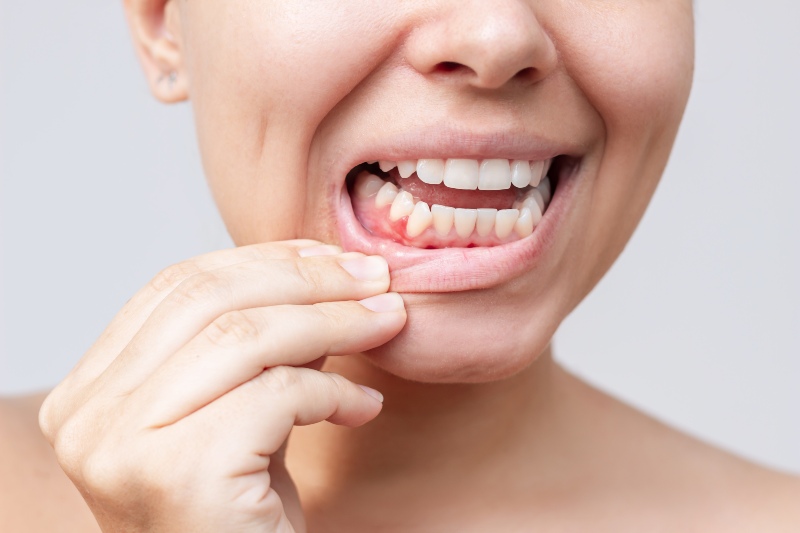
Your gums are sensitive tissue. When your mouth is dry, your gums can become red, swollen, and tender. This irritation is often made worse by post-nasal drip. Mucus dripping down the back of your throat can irritate the soft tissues in your mouth, creating a breeding ground for bacteria.
Gum inflammation allergies can mimic the early signs of gingivitis. You might notice that your gums bleed slightly when you brush or floss. While this is often temporary, ignoring it can lead to gum disease if you aren’t careful with your oral hygiene routine during this time.
Increased Risk of Cavities and Oral Infections
Because saliva helps protect your enamel, a dry mouth creates the perfect environment for cavities. But there’s another hidden threat during allergy season: cough drops.
Many people suck on cough drops or throat lozenges to soothe a scratchy throat, but these products are often sugary. If you keep a lozenge in your mouth for hours a day, you’re constantly bathing your teeth in sugar. The bacteria in your mouth eat this sugar and produce acid, which eats away at your teeth. If you combine a dry mouth with high sugar intake, you have a recipe for rapid tooth decay.
Mouth Breathing and Its Impact on Teeth and Gums
Breathing through your mouth is a typical response to nasal congestion, especially while sleeping. Chronic mouth breathing can cause:
- Halitosis – A dry environment allows foul-smelling bacteria to thrive on the tongue and gums.
- Gingivitis – Dry gums pull away from the teeth, creating pockets where bacteria can hide.
- Throat Irritation – Air that bypasses the nose isn’t filtered or warmed, which can irritate the throat tissues.
Essential Oral Care Tips During Allergy Season
By taking a few extra hygiene steps, you can keep your teeth and gums healthy even when the pollen count is high. Here’s a guide to oral care during allergy season:
- Stay Hydrated – Drink plenty of water throughout the day to help thin out mucus and keep your mouth moist.
- Rinse With Saltwater – If your gums are sore or your throat is scratchy, gargle with warm saltwater to help reduce inflammation and draw out bacteria.
- Choose Sugar-Free Options – If you need cough drops or liquid allergy medicine, always choose sugar-free options.
- Keep Brushing and Flossing – Brushing and flossing are crucial to remove plaque, especially if your mouth is dry.
- Treat Your Allergies – Reducing your allergy symptoms will help your teeth. Talk to your doctor about the right medication for you.
- Change Your Toothbrush – If you’ve been sick, it’s a good idea to swap out your toothbrush to avoid reintroducing bacteria.
When to See Your Dentist
Most of the time, allergy-related dental problems will go away once your allergies subside or the season changes. However, there are times when you should make a dentist appointment as soon as possible:
- The tooth pain is confined to one specific tooth
- The pain continues even after your sinus pressure is gone
- You have swelling in your jaw or face
- Your gums are bleeding excessively
- You have a fever along with your tooth pain
Contact Us for Dental Care in Westlake
If you’re unsure if allergies or a dental problem are causing your tooth pain, Dental Care of Westlake is the team to call. We can explain your oral health symptoms and provide comprehensive treatments, so contact us today to schedule an appointment in Westlake, OH.
FAQ About Seasonal Allergies and Oral Health
Can Allergies Cause My Teeth to Feel Loose?
It’s rare for allergies to make teeth feel loose. However, severe inflammation in the sinuses or gums can sometimes make teeth feel slightly different when you bite down. If a tooth feels loose, see a dentist immediately.
Why Do My Gums Hurt When I Have Allergies?
This is usually due to dryness. Mouth breathing and antihistamines reduce saliva production, leaving the gums vulnerable to irritation and bacteria. Gum inflammation allergies are a common side effect of a dry mouth.
Can I Brush My Teeth Immediately After Vomiting From Nausea Caused by Post-Nasal Drip?
No. Stomach acid softens your enamel. If you brush right away, you can scrub the enamel off. Instead, rinse your mouth with water and baking soda to neutralize the acid, and wait about 30 minutes before brushing.