
Why Tongue Cleaning Is Essential for Fresh Breath
Why Tongue Cleaning Is Essential for Fresh Breath
The missing piece of your oral hygiene routine and the key to fresh breath could be your tongue. Many people who brush and floss daily choose to ignore their tongue. However, cleaning this part of your mouth is one of the most effective ways to prevent bad breath. Dental Care of Westlake can offer fresh breath tips and explain why cleaning your tongue is a game-changer for your oral health.
Why Tongue Cleaning Matters for Oral Health
Think of your tongue like a plush carpet. It might look smooth to the naked eye, but it’s covered in tiny bumps called papillae. These bumps help you taste food and move it around your mouth, but they also create tiny valleys and ridges. These ridges are perfect hiding spots for food particles, dead skin cells, and bacteria. If you only brush your teeth, you’re leaving all that debris on the surface of your tongue. This coating – which is usually white or yellowish – is a major contributor to dental issues. Among the tongue-cleaning benefits is removing this layer, which helps keep your entire mouth cleaner.
How Tongue Bacteria Cause Bad Breath
The main reason your tongue causes odors is bacteria. Your mouth is full of bacteria, which is normal. However, specific bacteria types thrive on the back of your tongue, where it’s darker and has less oxygen. When these bacteria eat the leftover food proteins and dead cells on your tongue, they release waste in the form of volatile sulfur compounds.
Oral bacteria removal is the key to stopping this process. If you don’t physically remove the bacteria and their food source from your tongue, they’ll keep producing these smelly gases. Mouthwash might cover the smell for a short time, but it doesn’t remove the source of the problem as physical cleaning does.
Benefits of Regular Tongue Cleaning
Adding this simple step to your daily routine does more than you might think. Here are the top tongue-cleaning benefits:
- Better Breath – By removing the bacteria responsible for odors, you solve the problem at its source.
- Improved Taste – When your tongue is covered in a film of bacteria and dead cells, your taste buds are blocked. Cleaning your tongue can make your favorite foods taste richer and more flavorful.
- Less Plaque – The bacteria on your tongue can travel to your teeth and gums. Cleaning your tongue helps reduce the overall bacteria count in your mouth, which can slow plaque buildup.
- Better General Health – Your oral health is linked to your overall body health. Reducing harmful bacteria in your mouth supports your immune system.
Tongue Scraper vs. Toothbrush: What Works Best?
While using a toothbrush to scrub your tongue is better than doing nothing, it’s not the most effective tool for the job. Toothbrushes are designed to clean the smooth, hard surfaces of your teeth. The bristles are made to sweep plaque off enamel. When you use a toothbrush on your tongue, the bristles tend to just move the bacteria around rather than lifting them off.
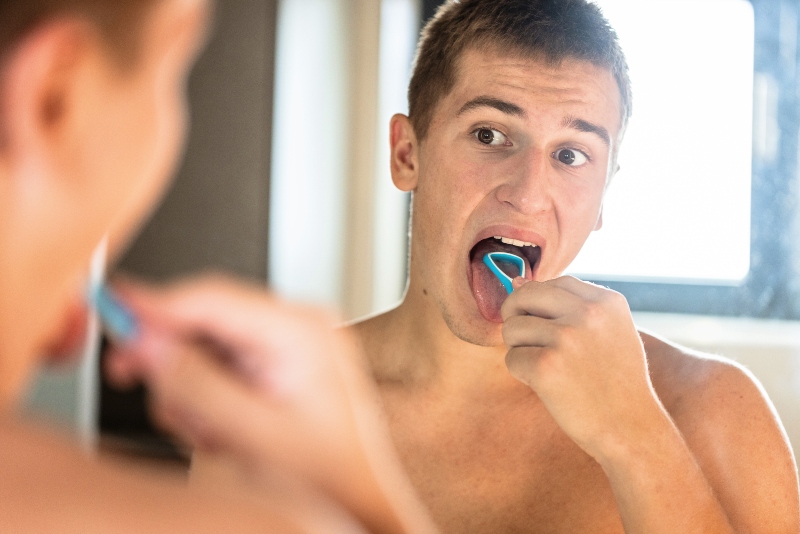
Tongue scraper use is better for this part of your oral hygiene routine. A tongue scraper is usually made of plastic or metal that has a flat edge. This edge glides over the tongue, effectively scraping up the coating of waste and bacteria so that you can rinse it away. It removes significantly more bacteria than a toothbrush alone.
Step-by-Step Guide to Cleaning Your Tongue Properly
Using a tongue scraper is easy and takes less than a minute. Here’s how to do it correctly:
- Stand Before the Mirror – Open your mouth widely and stick out your tongue as far as is comfortable.
- Position the Scraper – Place the rounded end of the tongue scraper at the back of your tongue. If you’re new to this, you might be unable to go all the way back without gagging. Start where you feel comfortable and work your way back over time.
- Pull Forward – Apply gentle pressure and pull the scraper forward to the tip of your tongue. You should see a whitish residue on the tool.
- Rinse the Tool – Wash the scraper with warm water to remove debris.
- Repeat – Do this motion two to five times until you feel you’ve covered the whole surface.
- Rinse Your Mouth – Swish some water around your mouth to clear away any loosened debris.
- Clean the Scraper – Wash your scraper with soap and warm water and store it in a clean, dry place.
How Tongue Cleaning Supports a Complete Oral Hygiene Routine
Cleaning your tongue is vital, but it’s not a replacement for brushing and flossing. A solid oral hygiene routine involves attacking bacteria from all angles:
- Brushing – Cleans the surfaces of your teeth
- Flossing – Cleans between the teeth where a brush cannot reach
- Tongue Cleaning – Cleans the largest surface area for bacteria in your mouth
When you combine all three, you give your mouth the best chance at health. Bad breath prevention requires consistency to eliminate bacteria’s safe harbor, preventing them from multiplying and spreading back to other areas you’ve cleaned.
Tongue Cleaning’s Role in Preventing Oral Infections
A heavy coating on the tongue isn’t just smelly. It can sometimes signal or lead to infection. One common issue is oral thrush, a yeast infection of the mouth. It appears as white lesions on the tongue or inner cheeks. Regularly inspecting and cleaning your tongue helps you spot changes early. If you keep the bacteria load down, you’ll maintain a healthy balance of microbes in your mouth. This natural balance is your body’s first defense against infections.
When to See a Dentist About Persistent Bad Breath
Sometimes, bad breath persists even if you’re doing everything right. If you brush, floss, and scrape your tongue daily but still struggle with odor, call a professional. Persistent bad breath can be a warning sign of other health issues, such as:
- Gum disease
- Dry mouth
- Sinus infections
- Diabetes
- Digestive issues like acid reflux
Contact Dental Care of Westlake Today
Dental Care of Westlake can improve your oral health with comprehensive checkups and personalized advice. We’ll help you identify the root cause of bad breath issues and ensure your teeth and gums are in top shape. Contact us in Westlake, OH, to schedule an appointment today.
FAQ About Tongue Cleaning
How Often Should I Clean My Tongue?
You should clean your tongue at least once a day. Many people find it easiest to do it in the morning to remove the bacteria that grew overnight.
Can I Hurt My Tongue by Scraping?
You only need gentle pressure to remove the bacterial coating. If your tongue bleeds or feels sore, you’re pressing too hard.
Should I Use Toothpaste on My Scraper?
The mechanical action of scraping is what removes bacteria. However, some people like the fresh taste of using a little toothpaste.
Is a Metal or Plastic Scraper Better?
Both work well. Metal scrapers are durable and easier to sterilize. Plastic scrapers are often cheaper and can be gentler for beginners.